Royal Icing
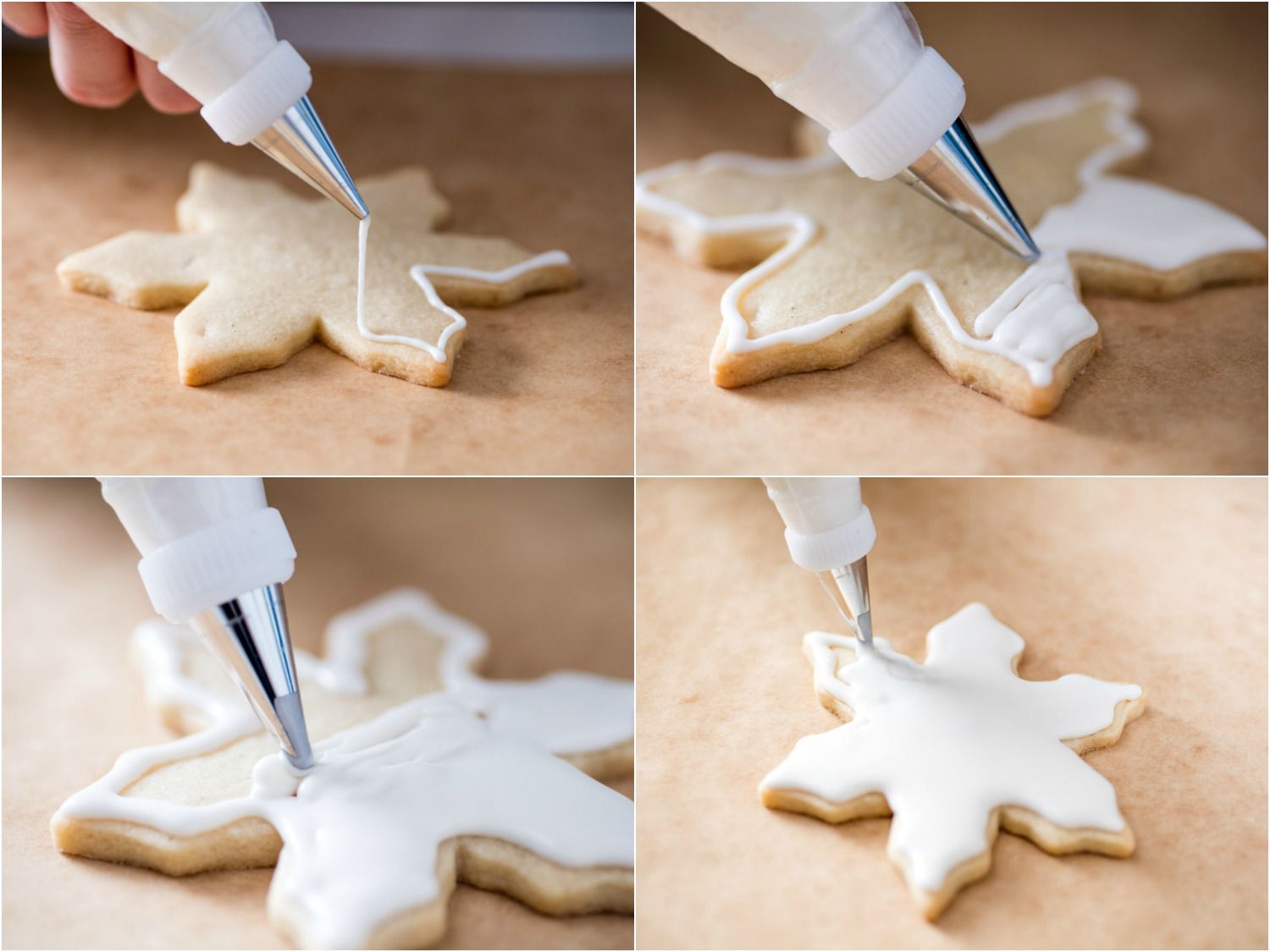
Royal Icing has a variety of uses in cake decorating. It dries very hard, so this is not an appropriate Icing for covering a cake. Many projects made with Royal Icing can be made several days in advance. Flowers piped with Royal Icing will be lightweight and have crisp petals. Royal Icing is used for details on Fondant-covered cakes, such as string work, brush embroidery, and run sugar. It is commonly used as a “glue” to assemble gingerbread houses.
Recipe:
500g Icing Sugar
3 Large Egg Whites at room temperature
15g Cream of Tartar
Method:
Sift Icing Sugar. Pour the Egg Whites into a mixing bowl. Mix in the Cream of Tartar and Icing Sugar. After all the ingredients are incorporated, beat on high speed until stiff peaks form. Keep icing covered with a damp towel.
Yields 6235ml.
Royal Icing dries and forms a crust quickly. When working with Royal Icing, always keep the bowl covered with a damp towel.
Royal Icing with Meringue Powder
Recipe:
4 Tbsp (50g) Meringue Powder
½ tsp (2g) Cream of Tartar
⅔ Cup (160ml) water
8 Cups (1,4Kg) Powdered Sugar
1 Tbsp (12.5g) Gum Arabic
Method:
In a mixing bowl, combine Meringue Powder, Cream of Tartar, and Water. Beat on high speed until stiff peaks form. In a separate bowl, stir together Powdered Sugar and Gum Arabic. Mix thoroughly and add to Meringue. Beat on low speed until ingredients are incorporated, then mix on high speed for several minutes until stiff peaks form. Keep Icing covered with a damp towel.
Yields 4¾ cups (1.175L).
Perfecting Royal Icing
- Sifting the Powdered Sugar is important for piping to keep tips from becoming clogged. Use a sifter with a very fin, mesh screen.
- Royal icing will break down with the presence of grease. Be sure all utensils and bowls are completely grease-free. Piping Royal Icing on Buttercream may cause grease spots to form.